
Central Asia
- Main
- About Council
- News
- Newsletters
- Information
- Trade Leads
- Recipes
- Contacts
News
Uzbekistan: President professes desire to promote economic reforms
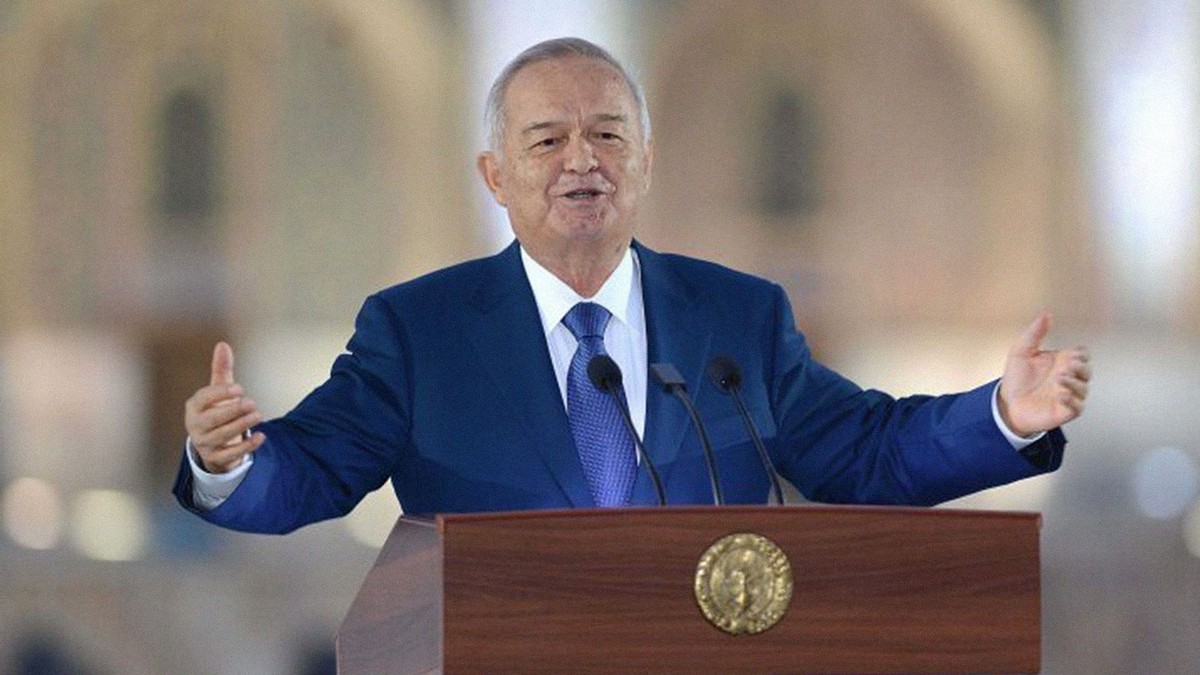
With the formality of reelection behind him, Uzbekistan�s leader, Islam Karimov, says he is setting his sights on improving the country�s economic fortunes.
Official economic statistics in Uzbekistan paint an upbeat picture. In a New Year�s address, for example, Karimov claimed that GDP increased 9.5 percent in 2007, with industrial growth reaching 12.1 percent. But independent experts question those figures, with some saying they are severely distorted and others insisting that they do not accurately reflect Uzbekistan�s economic environment. Underscoring a broad gap in the representation of Uzbekistan�s economic health, officials in Tashkent say the inflation rate in 2007 was roughly 2.9 percent, while the International Monetary Fund estimates the rate at 12.2 percent.
Whatever is the actual state of the Uzbek economy, Karimov is making it clear that he wants to improve economic conditions. He announced in the New Year�s address that state salaries and pensions would increase “not less than two-fold” in the coming year. His comments signaled that the Uzbek government now sees the maintenance of political stability as being linked to a need for economic growth. “Our main aim is to ensure high economic growth rates and improvement in the population�s well-being; and the strengthening of stability in our country by intensifying and increasing the effectiveness of reforms,” he said in comments broadcast on state television.
To hasten the reform pace, many experts both inside the country and abroad believe that Karimov must seek rapprochement with the European Union and the United States. In his address, he said a top priority in 2008 for Uzbekistan would be to attract more “investments and modern technologies to our country.”
In Uzbekistan�s late December presidential poll, Karimov won controversial re-election with nearly 90 percent of the vote, amid a turnout of 90.6 percent of the electorate. Karimov insisted that the election was “held in accordance with the principles of democracy, transparency and openness.” The Organization for Security and Cooperation in Europe questioned the official results, however. An OSCE statement issued December 24 said that voting “was held in a strictly controlled political environment, leaving no room for real opposition, and the election generally failed to meet many OSCE commitments for democratic elections.”
“The unusually high turnout of 90.6 per cent reported by the [Uzbek Central Election Commission], in particular in light of the small number of voters observed by the mission, raises further concerns regarding the accuracy of the reporting of results,” the statement added.
OSCE representatives pointed out that Karimov�s three presidential challengers had all endorsed the incumbent�s re-election.
The OSCE�s Office for Democratic Institutions and Human Rights declined to deploy a full mission, citing restrictions on the number of observers the Uzbek government would allow into the country, and delays in obtaining visas. Meanwhile, the representatives of several international news agencies, including The Associated Press, were denied accreditation.
Human Rights Watch was blunter about Uzbekistan�s election process. “While there are four candidates, it would be absurd to speak of a competitive process,” said Holly Cartner, its Europe and Central Asia director, in remarks quoted in a statement.
Karimov — who was elected Uzbek president in 1991 and 2000 and has twice extended his term by referendum — was taking part in the poll despite a constitutional provision limiting presidents to two terms, and in the wake of a legal ambiguity that had seen him remain in power for almost a year after his current term expired in January 2007. This fact, some observers said, is symptomatic of the general weakness of Uzbekistan�s political health. “The constitution means zero in Uzbekistan,” Dr Ustina Markus, Associate Professor at the Kazakhstan Institute of Management, Economics and Strategic Research, told EurasiaNet.
Observers suggested that the legal context of Karimov�s re-election may not be a priority concern for Uzbekistan�s electorate, however. “Given the departure from legal and rational norms that is inherent in the region, I don�t think tinkering around with constitutions is uppermost in people�s minds,” Michael Denison, an expert on Central Asian affairs at the University of Leeds, told EurasiaNet. “They know who their leader is and they know what the score is.”
Some observers expressed doubt that the resounding 88 percent of the vote for Karimov was a reliable reflection of the true nature of public feeling the Uzbek leader. “I think he�s very unpopular,” Naubet Bisenov, an analyst specializing in Uzbek affairs at the Institute for Economic Strategies-Central Asia, told EurasiaNet, citing widespread poverty, restrictions on trade and travel and abuses by the security services as sources of public discontent.
While public discontent may be quietly growing, the message that protest is not tolerated is clear. “In terms of his control of the country, all his control and all his power is based on force,” Bisenov said. “He is anything only thanks to his security services — police and army — which are propping up his regime.”
Source: www.eurasianet.org
Date: 4 January 2008
Other news
- 15.01.2008
-
In 2007 inflation in Moldova made 13.1%
- 14.01.2008
-
Tajik GDP up 7.8% in 2007
- 14.01.2008
-
Kyrgyzstan�s GDP growth totaled 8,2% in 2007
- 14.01.2008
-
Ukraine delegation to discuss Ukraine entry bid in WTO in Brussels
- 11.01.2008
-
Kyrgyzstan: a New Year and new Government, but lingering hints of political rancor
- 10.01.2008
-
Kyiv�s Epidemiology Station finds no anthrax pathogens in soil sample taken from Zhovtneva hospital�s territory
- 10.01.2008
-
Food prices will rise in Kyrgyzstan in spring
- 09.01.2008
-
Tymoshenko to renew smuggling -stop program
- 09.01.2008
-
More than 400 thousand domestic animals will be vaccinated in Kyrgyzstan from rabies
- 08.01.2008
-
WTO can consider Ukrainian question in a month
- 08.01.2008
-
Kyrgyzstan: New Prime Minister makes economy a priority
- 08.01.2008
-
GDP growth in Kazakhstan in 2007 made 8.7 % – Masimov
- 05.01.2008
-
Food corporations to be formed in Kyrgyzstan to provide food security
- 04.01.2008
-
Uzbekistan: President professes desire to promote economic reforms
- 29.12.2007
-
Ukraine might be accepted to WTO on February 5-6, 2008
- News archive